Fool’s stuffing
The Dark Half“Fool’s stuffing” is George Stark’s grotesque name for putrid remains, a phrase that turns his violence into a recurring image of bodily corruption. First encountered in Thad Beaumont’s nightmare, it returns as a threat and a message, binding the imagined world of Endsville to deaths Stark claims responsibility for.
Meaning and First Appearance
In a dream, Thad touches the kitchen stove and it splits apart. Inside the dark opening is a decomposing turkey, its cavity leaking black fluid and unidentifiable pieces of flesh. Stark, speaking from behind him, calls the revolting contents fool’s stuffing. When Thad asks what he means by “down here,” Stark answers that this is Endsville, where all rail service terminates. The phrase is therefore introduced not as a literal culinary term but as part of Stark’s vocabulary for a place of death and decay.
The scene makes the expression material as well as verbal. The stove breaks, its heating coils spring out of place, and the ruined bird occupies the cavity where an ordinary meal might be prepared. Thad then stumbles over Liz’s purse; when he grabs the kitchen table, it collapses into splinters and sawdust. In the dream’s collapsing domestic space, familiar household objects become vessels for destruction. “Fool’s stuffing” names the grotesque contents at the center of that reversal.
Endsville and the Threat
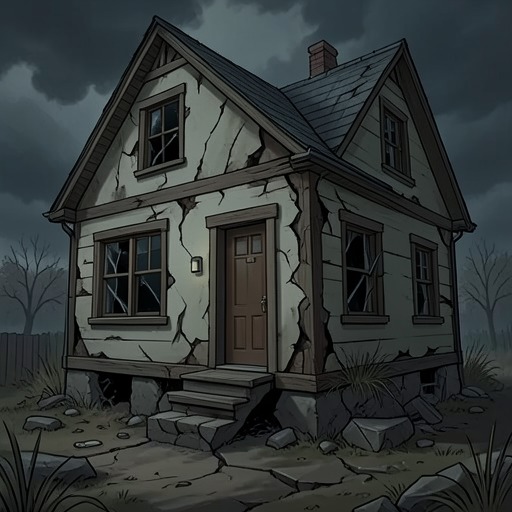
The phrase acquires a sharper meaning in a later recurring dream. Stark leads Thad through a deserted house and insists that its owner is dead, gone to the place where rail service ends. Liz is dead there, and Frederick Clawson has joined her, also dead. Stark says that squealers are turned into fool’s stuffing, then warns that he will take care of them all, one by one, unless Thad stays out of his way. The line makes the expression part of a direct threat against Thad’s circle, while the dream’s dead figures give the threat its frightening scope.
The dream joins the phrase to another repeated warning: the sparrows are flying again. A vast flock darkens the day outside the house, and Stark tells Thad not to forget that they are flying. Fool’s stuffing and the sparrows thus recur together in the nightmare as signs of death and impending violence, while Endsville supplies the imagined destination toward which the dream’s dead seem to point.
From Nightmare to Recurring Message
Thad later writes fool’s stuffing during an episode he cannot confidently distinguish from a blackout, trance, or fugue. He tears up the paper and sends it down the waste chute, telling himself that the words may have grown entirely in his own mind and need have nothing to do with the murders of Homer Gamache or Frederick Clawson. His dismissal echoes Stark’s language: Thad mentally answers that down here they call it nonsense, while Endsville remains the phrase’s uncanny counterpart. The episode leaves the words suspended between an image produced by Thad’s mind and a possible connection to real violence.
Stark uses the phrase outside Thad’s dreams as well. In a phone call to Rick Cowley, he tells Rick to ask Thad who he is, says Rick is walking around dead, and announces that he is not finished making fool’s stuffing. The expression now serves as a taunt delivered to a living target: Stark invokes Thad as someone who understands the reference and turns the phrase into a promise of further violence.
A later message carries the words into the aftermath of murder. Alongside the written warning that the sparrows are flying again, another note reads “MORE FOOL’S STUFFING. TELL THAD.” The terse instruction makes the phrase evidence of Stark’s continuing communication with Thad through the consequences of his violence. What began as a grotesque label inside a dream has become a recognizable signature in a message directed at him.
Narrative Function
The expression’s force comes from its movement between settings and forms: a decomposing bird in a dream, a rule Stark gives for what happens to informers, a phrase Thad writes during an uncertain fugue, a spoken threat to Rick, and a written message telling Thad that more has been done. Each recurrence makes the phrase less safely dismissible as dream language. Its association with Endsville gives it a death-bound resonance; its use in waking threats connects that imagined destination to the novel’s actual murders.
Stark’s language also collapses the distance between fiction and consequence. He does not merely threaten death in neutral terms; he gives its aftermath a grotesque name and repeats that name until it functions as a private code between himself and Thad. The phrase’s recurring pairing with the sparrows further ties it to Stark’s warnings of approaching violence. Fool’s stuffing is both an image of physical ruin and a verbal mark by which Stark makes his presence felt.